All official European Union website addresses are in the europa.eu domain.
See all EU institutions and bodies
An official website of the European Union | How do you know?
Environmental information systems
EN




Key message
Develop a clear communication strategy to ensure that adaptation planning is understood by everyone and remains relevant.
Effective communication about climate change and the need for climate adaptation is vital – both within and outside your organisation – to maintain political relevance, raise awareness, gain acceptance and inspire action.
To develop an effective communication strategy that helps you engage with all relevant stakeholders and the community, bear in mind the following points:

Establish consultative and participatory mechanisms
Refer to resources like the RESIN Guide for Stakeholder Engagement and the MIP4ADAPT citizen engagement manual, with participatory activities, tools and methods. Ensure that groups disproportionately affected by climate change impacts are included in participatory processes of stakeholder engagement, to understand their needs in adaptation planning and implementation.

Develop a communication strategy
- Adopt a shared terminology for coherent messaging and effective communication. Clarify key terms collaboratively to establish a common understanding and language to be used in interactions with services, stakeholders and the general public.
- Select messages and communication tools tailored to each specific stakeholder group and target audience.
- Raise awareness of climate adaptation and encourage active citizen engagement through diverse channels, including national or local web portals in local languages (see Examples on communication and citizen engagement below). Refer to the Climate-ADAPT country profiles for an overview of national web portals.
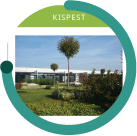
Citizen engagement for energy and climate adaptation plans, Kispest, Hungary
The Hungarian district of Kispest engaged citizens to help develop its sustainable energy and climate adaptation plan, using a citizen survey to collect district-level data. The survey, distributed online, was built around a series of open-ended and structured questions – a good practice for survey design. The data collected at local level complemented existing national-level data and ensured citizens had a say in future development plans. Citizens’ views and suggestions were integrated into the adaptation plan.
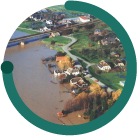
Room for the Waal River – protecting the city of Nijmegen, the Netherlands
At Nijmegen in the Netherlands, the Waal River bends sharply and narrows, creating a bottleneck. This has often caused flooding of the historic city centre. After the floods of 1993 and 1995, and faced with increased risk of flooding due to climate change, the city decided to give more room to the river, while at the same time protecting nearby natural habitats and providing recreational space.
Within the Room for the Waal River project, stakeholders and the local community were engaged through newsletters, information meetings and interactive workshops. Participants were asked to give their input at project presentations in these workshops. The project as a whole was subject to strategic environmental assessment and environmental impact assessment procedures, including the requirement for public participation. Through broad involvement of stakeholders and detailed responses to their input, stakeholders’ doubts and opposition were largely addressed.
Resources

RESIN Actor Analysis for Urban Climate Adaptation (2015)
Gives an overview of methods and tools supporting stakeholder analysis for the development and implementation of climate adaptation strategies.

MIP4ADAPT Stakeholder and Citizen Engagement in Climate Adaptation: A DIY Manual (2024)
Provides guidance on how to engage stakeholders for climate adaptation planning, with actions linked to each step of the RAST.

MOSAIC Cookbook (2018-2020)
A comprehensive guide for cities and policymakers on implementing co-creation within the context of EU Missions. The co-creation process is addressed in Phase 2.

Practical guide: How to build a climate story (2024)
This practical guide helps climate adaptation practitioners reach a wide-range of stakeholders through the development of a “climate story”. Climate stories can raise awareness about climate threats, share solutions, or inspire action and can help bridge the gap between science and society.
Language preference detected
Do you want to see the page translated into ?
Exclusion of liability
This translation is generated by eTranslation, a machine translation tool provided by the European Commission.
Exclusion of liability
This translation is generated by eTranslation, a machine translation tool provided by the European Commission.