All official European Union website addresses are in the europa.eu domain.
See all EU institutions and bodies
An official website of the European Union | How do you know?
Environmental information systems
EN


Ask Climate-ADAPT
Your AI assistant for exploring Climate-ADAPT knowledge, data, and resources from other adaptation knowledge providers in Europe.

Navigator of Climate Resilience Tools
A curated, quality-checked collection of digital tools supporting every step of the climate adaptation policy cycle - from risk assessment to monitoring and evaluation.
Integrating climate change adaptation across European Union policies is essential for strengthening Europe's resilience to climate change. Since the 2009 White Paper "Adapting to climate change: Towards a European framework for action" and reinforced by the 2021 EU strategy on adaptation to climate change, the European Union has progressively embedded climate change adaptation into a wide range of policy areas, recognising that climate change adaptation and resilience must be considered across sectors and governance levels. Climate-ADAPT supports this process by providing policy makers, planners and practitioners with the knowledge, tools and practical examples needed to inform the development and implementation of climate change adaptation and resilience policies.
Explore EU adaptation
Learn more EU policies for climate adaptation, funding, and getting started with adaptation

Find out more about climatic and non-climatic risk drivers
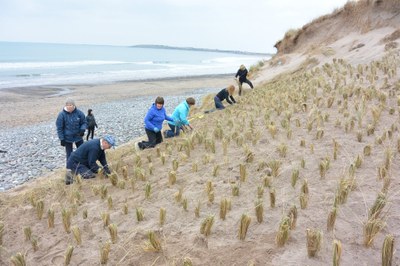
Explore the catalogue of adaptation options and case studies

Find out how progress on climate adaptation is measured
See also
See guidance for every step of the adaptation policy cycle

Comprehensive assessment of the major climate risks facing Europe today and in the future
A curated, quality-checked collection of digital tools supporting every step of the climate adaptation policy cycle

Find publications, tools, and other resources related to climate change and health
Share your adaptation knowledge
Share your research, case studies or adaptation initiatives to support informed adaptation action across Europe.
.
News
Sign up to receive the latest updates on climate change adaptation policy and knowledge development in Europe and European countries
Upcoming events
23 September - 2 December 2026 - Online
Training course: Ethics, Law and Governance for Climate and Environmental Action in Public Health
10 November 2026 - Bilbao, Spain
Transforming Health and Care Systems: Climate Resilience, Place-Based Innovation and Equity
The Transforming Health and Care Systems (THCS) Partnership will host its Annual Conference 2026 as a one-day pre-conference session at the European Public Health Conference in Bilbao. The event will bring together policymakers, researchers, institutions, practitioners, ecosystems and THCS-funded projects to explore how health and care systems can be transformed to address today’s most pressing societal challenges. Aligned with the priorities of the European public health community and with the overarching theme of the EPH Conference, the event will focus on interconnected entry points for system transformation: climate resilience, circularity, urban and rural health systems, equity, and research and innovation priorities.
11 - 13 November 2026 - Bilbao, Spain
19th European Public Health Conference
The 2026 European Public Health (EPH) Conference in Bilbao will focus on“Urban and global synergies: shaping the future of public health with climate resilience, equity and innovation.” The conference will explore how public health can respond to the interconnected challenges of climate change, urbanisation, health inequities, and sustainability, bringing together researchers, policymakers and practitioners to identify innovative solutions for healthier and more resilient communities. Key themes include climate-resilient health systems, the role of cities as drivers of health and sustainability, reducing inequalities in both urban and rural settings, and designing environments that support physical and mental wellbeing.
12 November 2026 - COP21 - Antalya, Turkey and online
Keeping cool in the heat: From policy to local action for health
Extreme heat is an escalating threat to health and well-being, calling for stronger preparedness, coordinated action and protection of populations most at risk. This COP31 event organized by WHO/Europe will bring together policymakers, experts and local actors from across the European Region to share lessons from recent heatwaves and explore practical solutions that translate heat-health policies into action, from national strategies to community-level initiatives. Speakers will include delegates from the following organizations: the European Commission; the German Federal Ministry for the Environment, Climate Action, Nature Conservation and Nuclear Safety; United for Global Mental Health; the International Federation of Red Cross and Red Crescent Societies; the cities of Athens and Paris; the Royal Institute of British Architects; the World Meteorological Organization; and the Pan-European Commission on Climate and Health. WHO/Europe has published the second edition of its guidance on Heat–Health Action Plans (HHAPs), providing an updated framework to support countries and communities in strengthening preparedness, coordinated responses and protection against the growing health risks of extreme heat.
Language preference detected
Do you want to see the page translated into ?
Exclusion of liability
This translation is generated by eTranslation, a machine translation tool provided by the European Commission.
Exclusion of liability
This translation is generated by eTranslation, a machine translation tool provided by the European Commission.