All official European Union website addresses are in the europa.eu domain.
See all EU institutions and bodies
An official website of the European Union | How do you know?
Environmental information systems
EN


Climate-ADAPT case studies showcase implemented adaptation measures and policies to create and improve the enabling conditions for adaptation at all governance scales – from local to EU level. Case studies serve as inspiration on how known adaptation options can be implemented in practice under a range of different conditions.
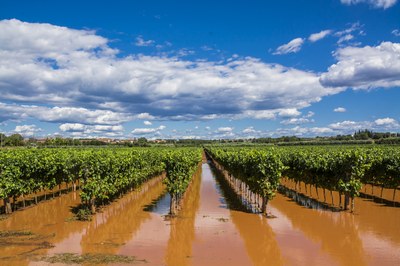
The EEA briefing 'Preparing society for climate risks in Europe — lessons and inspiration from Climate-ADAPT case studies' shares lessons learnt from the analysis of more than one hundred Climate-ADAPT case studies. The briefing shows that highlighting examples of adaptation actions can boost learning across the EU, Member States as well as regional and local authorities to help societies better prepare for climate change
Nine criteria have been defined for selecting and presenting Climate-ADAPT case studies.
This collection is regularly updated with new case studies, aiming to reach a balanced distribution of represented sectors, climate-related impacts, approaches applied and geographic locations. Case studies included are also periodically reassessed and updated, to track both the process and the effectiveness of adaptation actions across Europe.
The case studies on this site are intended to inform and inspire. The EEA does not have any commercial relationship with the organisations or individuals featured in them.
Access to Climate-ADAPT Case studies
To learn from diverse experiences, explore Climate-ADAPT case studies through the map-based Case study explorer below. Case studies can be explored through the following three filters:
Adaptation Sectors – Users can navigate across 19 adaptation sectors addressed by the case studies in terms of climate change adaptation.
Climate Impacts – This filter enables users to filter case studies through climate change impacts they cope with.
Key Type Measures - This filter enables users to select case studies through the categories of adaptation options implemented. The adaptation options are labelled by Key Type Measures (KTM). The KTM are a common framework and reporting approach for climate change adaptation that allows clustering the wider variety of adaptation options and measures across EEA Member countries.
Adaptation approaches - This filter allows to select case studies with explicit descriptions of how adaptation approaches were applied in the case studies which are key for leaning on the effectiveness of adaptation actions and governance settings. Examples are the availability of monitoring, learning and evaluation (MLE), the consideration of environmental, economic and social co-benefits and trade-offs, and the replication and/or upscaling potential of adaptation actions described in the case studies.
Loading...
You can also access case studies through the Climate-ADAPT resource catalogue. The catalogue enables filtering case studies by ‘adaptation sectors’ they address, ‘climate impacts ‘ they cope with, ‘adaptation elements’ they apply and by ‘countries’ and ‘transnational regions’ where they are located. It shows the same case studies in a 'list' view, also offering a download option.
How to share case studies on Climate-ADAPT?
Case studies are developed by the European Environment Agency (EEA), with the support of the European Topic Centre on Climate Change Adaptation and LULUCF (ETC CA, former ETC/CCA) and with key collaboration of the organisations responsible for their implementation.
Climate-ADAPT stakeholders are welcome to share information about their own experiences that meet case study criteria by contacting climate.adapt@eea.europa.eu.
Find case study catalogues of EEA Member countries
Climate-ADAPT case studies complement case study catalogues, prepared at national levels by EEA Member countries. Together, the EEA and EEA Member countries aim to give policymakers and practitioners in the EU the best available practical examples to reach agreed environmental and sustainability targets through adaptation actions. Explore the catalogues to learn from a wide range of adaptation experiences across Europe (Source: Eionet, October 2023).
Click here to see all case study catalogues of EEA Member countries
Explore further




Language preference detected
Do you want to see the page translated into ?
Exclusion of liability
This translation is generated by eTranslation, a machine translation tool provided by the European Commission.
Exclusion of liability
This translation is generated by eTranslation, a machine translation tool provided by the European Commission.