All official European Union website addresses are in the europa.eu domain.
See all EU institutions and bodies
An official website of the European Union | How do you know?
Environmental information systems
EN


Economic tools, or tools of economic analysis, support informed decisions by assessing the costs (including maintenance costs), benefits and wider implications of different adaptation options. They hep decision-makers compare alternatives, understand trade-offs and identify approaches that make effective use of available resources while delivering environmental, economic and societal benefits.
Key messages
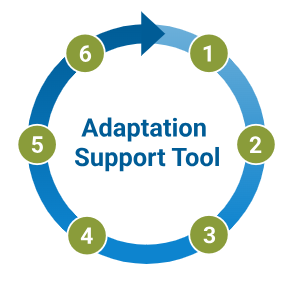
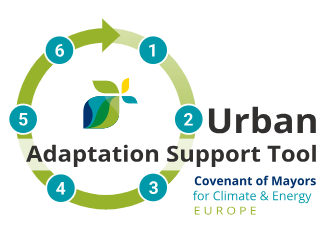
Economic tools help make informed choices about adaptation investments. Adaptation measures can require significant investment, while different options may be available to address the same climate risk. Economic analysis helps decision-makers compare these options and understand their costs, benefits and trade-offs, supporting transparent and well-founded investment decisions. Economic considerations form an important part of step 4 of the adaptation support tool or step 4 of the urban adaptation support tool, which supports the assessment and selection of adaptation options.
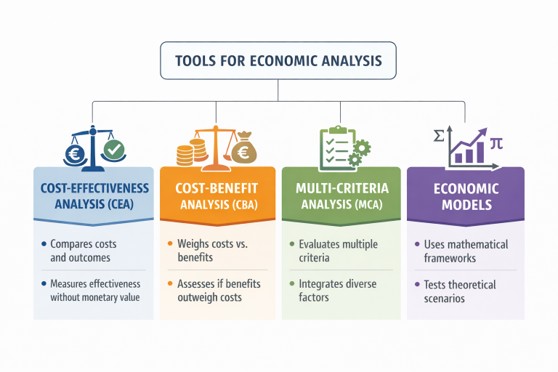
Different tools can support different types of decisions. The most used approaches include:
- Cost-effectiveness analysis (CEA) compares the costs of different actions against their outcomes. It can help identify which option delivers the desired outcome at the lowest cost, without requiring all benefits to be expressed in monetary terms.
- Cost–benefit analysis (CBA) serves two key purposes: first, to assess whether an intervention is justified by determining whether its benefits outweigh its costs and by how much; and second, to compare alternative options by evaluating their total expected costs and benefits, typically expressed in monetary terms.
- Multi-criteria analysis (MCA) allows options to be assessed against multiple quantitative and qualitative criteria. It is particularly useful where decisions involve environmental, social and economic considerations that cannot readily be expressed in monetary terms.
- Economic models represent relationships with economic or socioeconomic systems and can be used to explore how different adaptation choices perform under alternative assumptions and future scenarios. Their robustness depends on the validity of underlying assumptions and data, enabling transparent and consistent evaluation across different scenarios.
Economic analysis is most useful when considered alongside wider evidence. Distributional effects, uncertainty, environmental impacts and social priorities may all influence which adaptation option is most appropriate.
Why economic tools matter for climate change adaptation
Climate adaptation requires decisions about where, when and how to invest often limited resources. Economic tools such as the four examples above can help identify where adaptation investments are likely to deliver the greatest value, compare alternative approaches and make their costs, benefits and trade-offs more transparent. Used alongside climate-risk information and environmental and social considerations, they support more robust investment decisions and can help direct resources towards adaptation measures that deliver lasting benefits for people, ecosystem and the economy.
Explore further
















External links
Language preference detected
Do you want to see the page translated into ?
Exclusion of liability
This translation is generated by eTranslation, a machine translation tool provided by the European Commission.
Exclusion of liability
This translation is generated by eTranslation, a machine translation tool provided by the European Commission.