All official European Union website addresses are in the europa.eu domain.
See all EU institutions and bodies
An official website of the European Union | How do you know?
Environmental information systems
EN


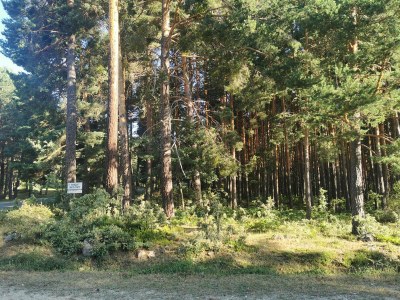
Maintaining and creating new forested areas is key to ensure the provision of ecosystems services, while reducing climate-induced risks such as land degradation, water scarcity, and ecosystem instability.
Afforestation (i.e. converting long-time non-forested land into forest) refers to the establishment of forests in areas where previously there have been none, or where forests have been missing for a long time. Reforestation refers to the replanting of trees on more recently deforested land. Initially, these options were used as mitigation approaches for carbon sequestration. However, they can also help forests to adapt to climate change by preserving spaces from human activities, reducing the destruction or degradation of habitats, enhancing landscape connectivity and reducing fragmentation. Afforestation and reforestation can also control soil degradation, hydraulic and landslide risks and encourage local communities towards agroforestry or silvo-pastoral systems, thus creating new income opportunities.
Relevant EU policies
Biodiversity Strategy for 2030, New EU Forest strategy for 2030, LULUCF Regulation, Common Agriculture Policy
Advantages
- Supports carbon sequestration and climate mitigation.
- Improves ecosystem services, like the regulation of water cycles, connectivity, soil preservation, biodiversity support, and natural pest control.
- Can boost land productivity, generate additional income streams (e.g., timber, eco-tourism), and support sustainable development.
Disadvantages
- Involves considerable upfront and maintenance costs.
- May be affected by land-use conflicts, via competing demands.
- May generate biodiversity loss if poorly designed, e.g. with the use of monocultures or exotic species.
- Delayed or uncertain returns of investment, since forest growth takes time before full ecological and economic benefits materialize.
- Its implementation is affected by fragmented and private land ownership (different land rights, land access, willingness of landholders to adopt this practice).
Relevant synergies with mitigation
Carbon capture and storage
Read the full text of the adaptation option
Description
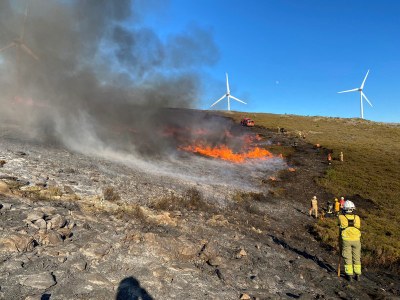
Climate change and forest ecosystems are closely connected, with climate mainly affecting the rate, frequency, intensity and timing of air temperature, solar radiation and rainfall. Climate change could represent a threat for forest ecosystems and services, especially in Mediterranean regions, where higher rates of tree mortality and forest fires, due to enhanced temperatures and droughts conditions, are expected to increase (EEA, 2016a; 2016b). Modified climate conditions have already led to negative impacts such as changes in: forest species composition and biodiversity, growing rate, resistance to pest and disease, invasive species propagation, forest fire regime and forest susceptibility to fire.
Forests can act as carbon sink; they can accumulate atmospheric CO2 as carbon in vegetation and soils. However, human activities affecting land use and forestry characteristics can alter the carbon cycle between the atmosphere and the terrestrial ecosystems leading to more CO2 emissions. Since forests are able to act as carbon sink, they are included in international policies (EU LULUCF Regulation 2018/841) to address climate change both via mitigation and adaptation processes; linking these two aspects should be preferred.
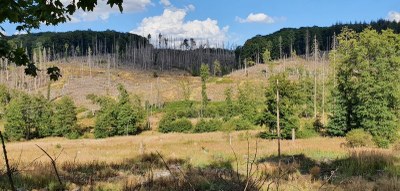
Afforestation and reforestation projects can pursue this double role for forest ecosystems. Afforestation (i.e. converting long-time non-forested land into forest) refers to the establishment of forests where previously there have been none, or where forests have been missing for a long time (50 years according to UNFCCC). Reforestation refers to the replanting of trees on more recently deforested land (i.e. converting recently non-forested land in forest). If these two approaches are viewed as complementary, they may enable “win-win” policy options. However, if unsustainably managed, both practices may be controversial as they may lead to the destruction of original non-forest ecosystems (e.g. natural grassland).
At international level, afforestation and reforestation have been initially recognized as mitigation approaches, and have been promoted for carbon sequestration goals. However, they can also help forests to adapt to climate change by decreasing human pressures (for example by reducing the destruction or degradation of habitats) and enhancing landscape connectivity and reducing fragmentation (thus facilitating species migration under climate change conditions). Afforestation and reforestation may also contribute to preserve biodiversity hotspots, avoiding soil degradation and protecting other natural resources (e.g. water).
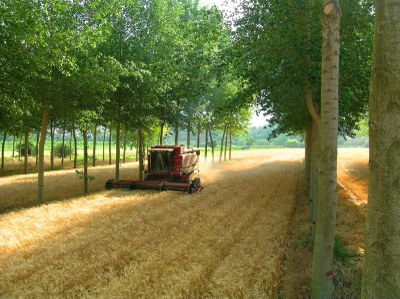
The sustainable management of afforested or reforested land help in pursuing adaptation responses, since it maintains forests status and guarantees ecosystems services, especially at local scale, by reducing vulnerability to climate change and to biodiversity loss. In case of crop failure due to climate change, forests can provide safety nets for local communities with their products (e.g. with both wood or non-wood products, such as game animals, nuts, seeds, berries, mushrooms, medicinal plants). Forests also help in regulating water flow and water resources through their hydrological-related ecosystem services (e.g. base flow conservation, storm flow regulation and erosion control). In addition, planting trees can create new habitats for more tolerant species and enhance biodiversity, especially when multispecies plantations (choosing native species and avoiding invasive ones, less adapted to the habitat) are preferred. Afforestation and reforestation can also control soil degradation, hydraulic and landslide risks and encourage local communities towards agroforestry or silvo-pastoral systems, thus creating new income opportunities. Finally, forest management practices, such as sanitation harvest, can help in reducing pests and diseases attack.
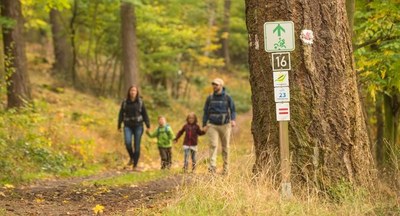
Forests are not only important for biodiversity but also for economic activities, such as trade of wood and non-wood products and eco-tourism. In 2021, about 473 100 people were employed in forestry and logging in Europe. The total gross value added (GVA) generated by the forestry and logging industry in the EU was 25 billion EUR in 2021 (Eurostat)., Forests are often considered aesthetically pleasing for the tourism sector: they offer various opportunities for hiking and biking. New or restored forests can create stunning landscapes that attract tourists seeking outdoor experiences. Tourists are especially attracted by biodiversity aspects, e. g. for the possibility of birdwatching. For this reason, afforestation and reforestation can be seen as adaptation opportunities also for the tourism sector. This refers to those cases where they are part of regional or national diversification strategies and boost sustainable forms of tourism that respect and even contribute to forest preservation. Through the Agenda 2000 programme, afforestation was intended as an accompanying measure of the EU common agricultural policy (CAP). The EU afforestation policies have supported the planting of about 2 million hectares of trees on agricultural land in the period of 1994-2015. Although afforestation is currently considered as a mitigation strategy by CO2 sequestration, the level of afforestation has decreased over past decades. The allocation in the EU Rural Development programs (2014-2020) planned the planting of further 510 000 hectares.
There is not enough information available to estimate the share of coniferous species versus broadleaved species in afforestation and reforestation programmes. Nevertheless, the share of the broadleaved and mixed forests has been increasing in Europe in the latest decades even if afforestation with conifers is still dominating in some countries.
Stakeholder participation
Different stakeholders can be involved in afforestation and reforestation practices, depending on the magnitude and ownership of the land involved. Governments, NGOs and civil society organizations, private sectors and research institutions are preferable to be involved for ensuring adaptation at larger spatial and temporal scales. Stakeholders should be involved during the implementation phase of the afforestation and reforestation practices (e.g. in the selection of the afforested or reforested area and in the identification of characteristics of trees plantation). However, stakeholders have a crucial role during the management phase of the afforested and reforested areas, as they can contribute to actions ensuring their growth, maintenance, and protection.
Success and limiting factors
The majority of European forests are privately owned (approximately 60% of forested land) rather than public (40%) (EU Factsheet). Therefore, afforestation and reforestation practices often involve private landholders, and for being successful, they need to be accepted by these stakeholders by overcoming institutional factors, such as rights and access to forests. Especially afforestation mainly occurs by planting trees on private lands, since the landowners can expect major incomes than from agricultural practices. In addition, afforestation will be successful if private landholders accept to participate in afforestation projects over long periods.
Transferring ownership of larger areas of common forest to local communities, and the associated income based on improved carbon storage, could largely be a successful factor in contributing to climate change mitigation (primary), but can also facilitate the maintenance of ecosystem services that are relevant for adaptation at the local level (e.g. water regulating services, soil preservation, forest products, etc.).
Socio-demographic characteristics of landholders (i.e. farm size and tenure), the social acceptability of afforestation by the community (e.g. not having conflict with agriculture goals), as well as landholders’ skills, knowledge and experience relevant for afforestation and reforestation can be success/limiting factors for the adoption of such practices.
Sharing information on the synergies between adaptation and mitigation approaches could also benefit the success of afforestation and reforestation practices. Farmers should know opportunities (including marketing opportunities) and risk of setting up afforestation and/or reforestation in their lands, for pursuing both mitigation and adaptation purposes.
Costs and benefits
Afforestation and reforestation may change the landscape and the associated ecosystem services. However, well-managed ecosystems can help societies to adapt to climate change by generating multiple socio-ecological benefits and promoting long-term approaches to climate change adaptation.
The adoption of afforestation and reforestation as adaptation practices, by integrating mitigation objectives, could help in overcoming financial barriers to adaptation as it can benefit from carbon funding (CDM, REDD+, voluntary carbon markets). As adaptation practices, they can also help in increasing local mitigation co-benefits, and the local capacity to cope with climate change.
Afforestation and reforestation can ensure social, economic and environmental improvements, contribute to the sustainable development (e.g. increase productivity and resilience of land) and provide additional income generation. These practices also contribute to guarantee ecosystems services by reducing vulnerability to climate change (i.e. forests help in regulating natural resources, controlling hydrological processes and land degradation, maintaining species biodiversity and reducing pests and diseases attack).
Costs should be sustained to prepare the ground, acquire and plant tree species, fertilize and fence the land, control vegetation, and for all maintenance and management practices, especially during the first three/five years. Costs for maintenance vary from an average of 300€ per hectare during the first year, to about 100€ per hectare during the third year (European Forest Institute, 2000). However, aid funds are provided to support local landholders to set up reforestation and afforestation practices. Aid for afforestation depends on tree species, varying from a maximum of about 2400€ ha-1 for eucalyptus to 4800€ ha-1 for broadleaves mixed plantations. In addition, compensations are provided for landowners to cover income losses due to afforestation in agricultural land. A maximum amount of 725€ ha-1 year-1 is, in fact, estimated for farmers mainly deriving their income from agricultural activities, while 180€ ha-1 year-1 is estimated for other private law person. These costs were established by the Commission Regulation (EC) No 1054/94 in order to regulate the financial programme, which was adopted on 5 May 1994.
The Common Agricultural Policy (CAP) represents the main source of EU funds for forests. Some 90% of EU funding for forests comes from the European Agricultural Fund for Rural Development, EAFRD. This includes afforestation and reforestation practices. A total of 27% of the 8.2 billion EUR established for the 2015-2020 period is allocated for reforestation, while 18% is dedicated to make forests more resilient and 18% for damage prevention. The CAP provides financial support to rural areas, but EU countries can choose to fund forestry measures through their national rural development programmes. As stated in the Chapter VIII of the Rural Development Regulation1257/1999, such financial support shall be granted only for forests and areas owned by private owners, by their associations, by municipalities or their associations.
Commercial interest (logging) or tourism revenues can be also a funding source for this adaptation option. Reforestation and afforestation can finally create new eco-tourism possibilities. They can also compensate for negative consequences of winter tourism, such as mountain landscape alteration due to e.g. ski slopes and associated infrastructure.
Legal aspects
Afforestation and reforestation activities are eligible under the Clean Development Mechanism (CDM), which is the main international policy instrument under the UNFCCC that links mitigation and adaptation. The 2% of CDM carbon offsets is imposed to finance the Adaptation Fund (Kyoto Protocol Article 12.8), even if CDM projects are not formally required to incorporate adaptation activities.
The REDD (Reducing Emissions from Deforestation and forest Degradation) initiative is also useful for financing forest preservations, increasing carbon stocks in forest ecosystems, and recently promoting sustainable forest management with a link to adaptation scope.
At international level, international agreements, such as the Kyoto Protocol and the Paris Agreement, put efforts in promoting the integration of adaptation and mitigation in forest ecosystems, but this potential has not yet fully realized, so far.
At European level, the adopted EU 2030 Biodiversity Strategy, as part of the European Green Deal, includes restoring degraded ecosystems across Europe by planting at least 3 billion additional trees by 2030. It also aims to develop guidelines on biodiversity-friendly afforestation and reforestation applying closer-to-nature-forestry practices.
The EU forest strategy for 2030 is one of the flagship initiatives of the European Green Deal and builds on the EU 2030 Biodiversity Strategy . The strategy will contribute to achieving various objectives: the EU’s biodiversity objectives as well as greenhouse gas emission reduction targets by 2030, the climate adaptation targets and climate neutrality by 2050. The strategy also puts a specific focus on tourism: it states that the Commission will promote collaboration between the tourism sector, forest-owners and nature protection services, and setting standards and norms for eco-tourism activities. The tourism industry should work in close cooperation with the forest managers to develop sustainable tourism products that positively influence human health, without having negative impacts on the natural values of the intended destinations, especially in protected areas.
FOREST EUROPE (Ministerial Conference on the Protection of Forests in Europe) is a Pan-European voluntary high-level forestry policy process. Since 1990, its aim has been to develop common strategies for the 46 signatories (45 European countries and the EU) on how to protect and sustainably manage forests.
A main funding mechanism for afforestation is the CAP. Rules on support for Strategic Plans are drawn up by EU countries under the common agricultural policy (Regulation (EU) 2021/2115) (Delegated Regulation (EU) 2022/126). Rules on the financing, management and monitoring of the common agricultural policy are set up in the Regulation (EU) 2021/2116) (Implementing Regulation (EU) 2022/128). It will finance almost 623 000 hectares for afforestation or agroforestry restoration (CAP 2023-27 – 28 CAP Strategic Plans at a glance).
In addition, the Land Use, Land Use Change and Forestry (LULUCF) Regulation (EU) 2018/841 ensures the inclusion of the emissions and removals from LULUCF in the climate and energy framework, and Member States have to ensure that emissions from land use, land use change or forestry are offset by at least an equivalent removal of CO2 in the sector (“not debt rule”).
Moreover, national policies can provide incentives or imposing regulations to promote practices with synergies between mitigation and adaptation; including adaptation in national guidelines and approval procedures for mitigation projects could stimulate the adaptation of afforestation and reforestation activities.
Implementation time
Afforestation and reforestation require a long implementation time, since they involve a wide range of actors and may encounter institutional complexity, both at national and international level.
Lifetime
Afforestation and reforestation as adaptation practices are part of the sustainable forest management principles. They also should become part of the local or national land use plans and therefore generally have a long life-time (decades). In addition, in order to receive funds aid and compensations to cover losses due to afforestation in agricultural land, the owners must guarantee the maintenance of the afforested land for at least 5 years.
References
IUCN, (2004). Afforestation and forestation for climate change mitigation: potentials for pan-European action.
Reyer C., Guericke M., Ibisch P.L., (2009). Climate change mitigation via afforestation, reforestation and deforestation avoidance: and what about adaptation to environmental change? New Forests (2009) 38:15–34.
Schirmer J. and Bull L., (2014). Assessing the likelihood of widespread landholder adoption of afforestation and reforestation projects. Global Environmental Change 24 (2014) 306–320.
Websites:
Published in Climate-ADAPT: Sep 24, 2020
Adaptation Option illustrations (1)

Related Resources
Language preference detected
Do you want to see the page translated into ?
Exclusion of liability
This translation is generated by eTranslation, a machine translation tool provided by the European Commission.
Exclusion of liability
This translation is generated by eTranslation, a machine translation tool provided by the European Commission.