All official European Union website addresses are in the europa.eu domain.
See all EU institutions and bodies
An official website of the European Union | How do you know?
Environmental information systems
EN


Reusing water after appropriate treatment can help address water scarcity, lowering the pressure on water bodies and ensuring a safe and predictable source of water.
Water reuse means to reclaim wastewater from a variety of sources, and to treat it to a standard appropriate for a second purpose, depending on its quality. It is a valuable option for water supply in areas where water is particularly limited including for example areas prone to drought risk (e.g. Mediterranean countries) or that do not have large and accessible water resources (e.g. islands).
Secondary purposes for water reuse include agricultural irrigation, groundwater recharge, industrial processes, drinking (potable) water supply and non-drinking urban applications (irrigation of parks, toilet flushing, etc.).
Examples of treated wastewater uses are:
- agricultural irrigation as it is a reliable source also during times of limited water availability;
- fire management and fighting by keeping soil moisture or suppressing fire;
- cooling purposes in industrial processes, as lower requirements regarding water quality are needed;
- drinking purposes if properly treated;
- domestic and recreational purposes, e.g. flushing toilets, irrigating gardens;
- the tourism sector, i e.g. snowmaking for skiing or irrigation of golf fields.
Relevant EU policies
Water Resilience Strategy, Water reuse regulation
Advantages
- Reduces polluted water, released in streams and lakes.
- Preserves drinking water in condition of water shortages.
- Creates people’s awareness in water consumption.
Disadvantages
- Requires advanced wastewater treatment.
- Needs effective monitoring techniques to ensure compliance with the different water use requirements.
- If not well-managed, may create health risk.
- Low acceptance level among poorly-educated citizens and stakeholders.
- Limited institutional capacity for formally establishing reuse schemes.
- Lack of financial incentives may limit its implementation.
Relevant synergies with mitigation
No relevant synergies with mitigation
Read the full text of the adaptation option
Description
Access to an adequate supply of water is central to a sustainable future, especially considering climate change is expected to exacerbate water scarcity problems in several European regions. The reuse of water reduces the pressure on water resources while preserving water security for human activities and for the functioning of ecosystems.
Water reuse means reclaiming wastewater from a variety of sources after proper treatment for a second purpose. Any type of wastewater (domestic, municipal, or industrial) can be considered suitable for its reuse, but its potential depends on water quality characteristics and use requirements. Secondary purposes include for example agricultural irrigation, groundwater recharge, industrial processes, drinking (potable) water supply and non-drinking urban applications (irrigation of parks, toilet flushing, etc.).
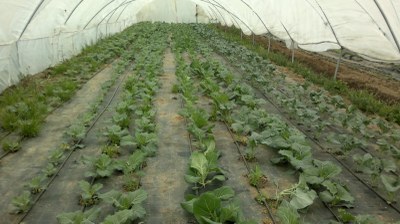
Water reuse is increasingly applied for agricultural irrigation as it is a reliable source also during times of limited water availability. The use of nutrient-rich treated wastewater for agriculture may, in addition, lead to a reduction (or elimination) of fertilizer application or increased productivity if the requirements of specific water use regulations are met. In this regard, water reuse offers a sustainable approach to contribute to food security. It leads to adequate food production levels despite the ongoing challenges posed by water scarcity. Using treated wastewater can also help conserve groundwater if the latest is used for irrigation.
A straightforward application is the use of treated wastewater for cooling purposes in industrial processes (business and industry sector), in thermal plants (Reducing water consumption for cooling of thermal generation plants), and more recently in data centres, as lower requirements regarding water quality are needed.
Potable water reuse refers to the use of properly treated wastewater for drinking purposes; it is a valuable option for water supply in areas that do not have large and accessible water resources (e.g. islands). Potable water reuse can be direct and indirect. Direct potable reuse applies treated wastewater that is piped into a water supply system without being diluted in a natural stream, lake or groundwater, before. Indirect reuse involves mixing of reclaimed wastewater with another water supply before treatment and re-use. In both cases, compliance with existing drinking water regulations is necessary for ensuring human health.
Another potential application of reused water can be in the tourism sector, in order to support the mitigation of tourism pressure on water resources. Tourism relies directly or indirectly on considerable water resources for accommodations, infrastructures, and activities. Water reuse can for example be considered in hotels for swimming pools, flushing toilets, irrigation of gardens or golf fields, fire management and fighting, and snowmaking for skiing. Water reuse is particularly relevant for tourism destinations that are prone to drought risk (e.g. Mediterranean countries) or that do not have large and accessible water resources, for example in islands (e.g. in islands, Circular Water Solutions in Southern Gotland).
Reclaimed water can also be used for fire management and fighting by keeping soil moisture or suppressing fire, as demonstrated by a case study in Riba-Roja de Túria (Spain).
Stakeholder participation
Water reuse initiatives can be implemented at a variety of spatial scales and involve different actors. The measure is difficult to implement in countries without an adequate institutional and normative background to facilitate re-use, or where socio-cultural acceptance and conflicts may hamper the implementation of this option. Stakeholder involvement is a key component of their implementation, because this adaptation option may raise several issues of concern for the general public especially regarding the quality of reused water. Consistent communication and easily understood messages explaining the benefits of water reuse need to be delivered to the public and stakeholders. The potential risks associated with the use of wastewater should be examined and addressed in order to obtain support from the involved stakeholders. Demonstration projects and sharing successful cases can be part of participatory activities.
Success and limiting factors
The JRC report "Water Reuse in Europe" (2014) lists the following main barriers for the implementation of water reuse schemes:
- Inconsistent and unreliable methods for identifying and optimising appropriate wastewater treatment technologies for reuse applications, which are able to balance the competing demands of sustainable processes
- Difficulties in specifying and selecting effective monitoring techniques, to ensure that water quality is compliant with the use requirements
- Significant challenges in reliably assessing the environmental and public health risks/benefits of water reuse across a range of geographical scales
- Poorly developed business models for water reuse schemes, and markets for reclaimed water
- Low levels of public and government enthusiasm for water reuse
- Limited institutional capacity to formulate and institutionalise recycling and reuse measures
- Lack of financial incentives for reuse schemes.
In addition, geographical disparities contribute to uneven technological challenges, permitting procedures and varying levels of social acceptance regarding the reuse of treated water.
One of the key success factors is stakeholder support and involvement to avoid strong opposition to planned schemes. Interested stakeholders should receive sufficient knowledge to understand the safety and applicability of reused water.
Technological developments are essential to provide adequate waste water treatment. They can remove both pathogens and chemicals, including emerging contaminants that can otherwise leach into groundwater or accumulate in crop tissue. Adequate treatment is also fundamental to avoid soil salinisation, since reclaimed water often contains high levels of salts, which can consequently reduce crop yield.
Costs and benefits
The possible benefits of the reuse of treated water for economy, society and the environment are numerous. These include reducing household water demand and easing pressure on public water supply, reducing upstream energy and environmental costs. The costs of recycling water may exceed those of using fresh water directly, but are justified by the several benefits water recycling provides: it saves high quality water for drinking, it reduces the amount of polluted water released to the environment, and it may have a quality making it suitable for specific alternative uses (e.g. relative high nutrient contents may provide fertilizers through its use for irrigation). However, beyond water reuse, it is also important to implement strategies that decrease unintended losses from water supply networks and the overall water demand that are the major causes of water scarcity. Alternative water reuse treatment technologies and other water saving solutions (see for example the adaptation options Reducing water consumption for cooling of thermal generation plants, and water restrictions and water rationing) should also be assessed. Holistic life cycle assessments can be applied in those assessments considering costs and benefits for saving water resources and reducing carbon emissions.
Prices for reused water prices should consider all those additional benefits. Public subsidies might be used to support the compensation of higher water tariffs. In general, the allocation of costs is a political decision, which defines how they will be divided between the general taxation and fees for those interested by the benefits of water reuse.
The cost of reclaiming water varies according to the geographical area, the treatment methods and the plant size. A comprehensive cost assessment of reclaimed water for irrigation purposes, compliant with the quality standards set by the current EU regulation, has been recently published (Expósito et al., 2024). The study considered treatment plants of different capacity (between 1 and 10 million cubic meters (Mm3) of treated water per year) located in the Mediterranean coast of Spain. The analysis revealed that total costs, including investment amortisation, vary between 0.09 (10 Mm3) and 0.16 (1 Mm3) EUR/m3 in the minimum cost scenario, and from 0.10 (10 Mm3) up to 0.19 EUR/m3 (1 Mm3) in the maximum cost scenario.
Legal aspects
In 2020, the European Commission released a “Regulation on minimum requirements for water reuse for agricultural irrigation”. The new rules apply from 26 June 2023 and are expected to stimulate and facilitate water reuse in the EU. The Regulation sets out harmonised minimum water quality requirements for the safe reuse of treated urban wastewater in agricultural irrigation, harmonised minimum monitoring requirements, risk management provisions to assess and address potential additional health risks, and possible environmental risks, permitting requirements and provisions on transparency, whereby key information about any water reuse project is made available to the public.
Technical specifications are set out in Delegated Regulation (EU) 2024/1765. They support the responsible parties to draw appropriate risk management plans and ensure the safety of water reuse projects.
In 2025, the European Commission adopted the Water Resilience Strategy. It recommends further safe water reuse beyond agriculture, including energy production and industrial processes. According to the strategy, the Commission will support Member States through guidance on the safe reuse of water. By June 2028, the Commission will evaluate the Water Reuse Regulation, and subsequently consider extending its scope beyond irrigation, according to the evaluation results
Implementation time
The implementation time strongly depends on the specific scope and measure adopted for water reuse. The full implementation of water reuse schemes might be in the range of 5-15 years. Some initiatives may take a longer time if the acceptance level of local communities is low.
Lifetime
The lifetime of water reuse schemes strictly depends on social acceptance, proper maintenance of applied solutions and evidence of real occurring benefits. Usually, the lifetime is greater than 25 years.
References
Koseoglu-Imer, Derya Y., et al. "Current challenges and future perspectives for the full circular economy of water in European countries." Journal of Environmental Management 345 (2023): 118627. https://doi.org/10.1016/j.jenvman.2023.118627
Alcalde Sanz L, and Gawlik B., (2014). Water Reuse in Europe - Relevant guidelines, needs for and barriers to innovation. Luxembourg, Publications Office of the European Union.
Angelakis, A. N., Gikas, P., (2014). Water reuse: overview of current practices and trends in the world with emphasis on EU states. Water Utility Journal, 8, 67-78
Kirhensteine, I., Cherrier, V., Jarritt, N., Farmer, A., De Paoli, G., Delacamara, G., and Psomas, A. (2016). EU-level instruments on water reuse. Final Report to Support the Commission’s Impact. Assessment, 1-292.
Pistocchi, A., Aloe, A., Dorati, C., Alcalde Sanz, L., Bouraoui, F., Gawlik, B., Grizzetti, B., Pastori, M. and Vigiak, O., (2017). The potential of water reuse for agricultural irrigation in the EU: A Hydro-Economic Analysis. Luxembourg, Publications Office of the European Union.
lcalde Sanz, L. and Gawlik, B., (2017). Minimum quality requirements for water reuse in agricultural irrigation and aquifer recharge - Towards a water reuse regulatory instrument at EU level. Luxembourg, Publications Office of the European Union.
Santana, M. V., Cornejo, P. K., Rodríguez-Roda, I., Buttiglieri, G., & Corominas, L. (2019). Holistic life cycle assessment of water reuse in a tourist-based community. Journal of Cleaner Production, 233, 743–752. https://doi.org/10.1016/j.jclepro.2019.05.290
Gössling, S., Peeters, P., Hall, C. M., Ceron, J., Dubois, G., Lehmann, L. V., & Scott, D. (2012). Tourism and water use: Supply, demand, and security. An international review. Tourism Management, 33(1), 1–15. https://doi.org/10.1016/j.tourman.2011.03.015
Websites:
Published in Climate-ADAPT: Feb 10, 2021
Adaptation Option illustrations (3)

Related Resources
Language preference detected
Do you want to see the page translated into ?
Exclusion of liability
This translation is generated by eTranslation, a machine translation tool provided by the European Commission.
Exclusion of liability
This translation is generated by eTranslation, a machine translation tool provided by the European Commission.