All official European Union website addresses are in the europa.eu domain.
See all EU institutions and bodies
An official website of the European Union | How do you know?
Environmental information systems
EN



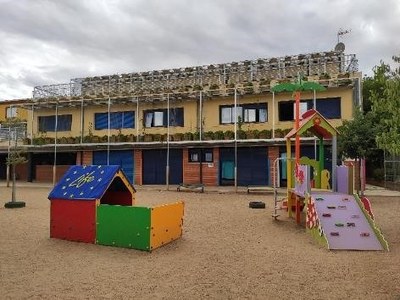
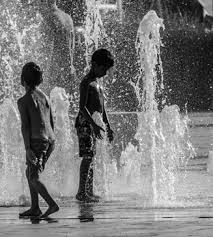
Climate change increases the intensity and frequency of heatwaves, as well as the duration of the heatwave period. The probability of high temperatures occurring outside the school holidays is increasing in Europe.
High temperatures negatively affect children’s well-being and their ability to concentrate. Extremely high temperatures may necessitate school closures. According to UNICEF, over 900,000 pupils in Europe had their education disrupted by heatwaves in 2024.
This data viewer explores the probability of high temperatures occurring now and in the future during the school year. It uses Copernicus Climate Change Service data, Eurostat data on educational facilities, and information about school holidays dates in individual countries.
Key messages
Currently, around 16,650 schools (4.2%) in Europe already experience days with maximum temperatures above 30°C during the school year.
By 2050, approximately 34,400 schools (8.6%) are projected to experience at least one hot day above 30°C during the school year under a high-warming scenario.
By 2100, about 25% of all European schools will experience days above 30°C during the school year; over 13,700 schools (3.4%) will experience at least one day above 35°C during a school year under a high-warming scenario.
Between 68-82% of days exceeding 30°C during the school year will occur before the summer holidays, while 18-32% will occur after the summer holidays. The percentage ranges cover different warming scenarios and timeframes.
Schools in Southern and South-Eastern Europe are experiencing the highest number of hot days, and their exposure to heat is projected to continue in the future. For example, by the end of the century, 76 days are projected to exceed temperatures of 30°C outside summer school holidays in Cyprus; 31 such days are projected in parts of Spain.
Educational facilities across Europe require urgent adaptation to reduce heat impacts on pupils and teachers. In addition, the timing and duration of the summer school holiday period may require reconsideration to respond to changing climatic conditions.
Explore viewer below
Note: Analysis updated 2026/07/03 to include additional schools.
The development of this dashboard was funded by the EEA-RTD Service Level Agreement on “Enhancing the access to in situ Earth observation data in support of climate change adaptation policies and activities”
Data source:
Probability of Hot days (raster) 2000-2100, Jan. 2026
School calendars in Europe (2025)
Related resources






Language preference detected
Do you want to see the page translated into ?
Exclusion of liability
This translation is generated by eTranslation, a machine translation tool provided by the European Commission.
Exclusion of liability
This translation is generated by eTranslation, a machine translation tool provided by the European Commission.