All official European Union website addresses are in the europa.eu domain.
See all EU institutions and bodies
An official website of the European Union | How do you know?
Environmental information systems
EN


Discover the impacts of climate change on human health
Rising temperatures and extreme weather events pose increasing threats to our health and well-being. Learn about these risks and ways to address them.



New in the Observatory
How climate resilient are Europe’s schools and hospitals? Have your say!
The Observatory has launched two Europe-wide surveys to understand how educational and healthcare facilities are prepared for the impacts of extreme weather.
We invite education and healthcare leaders, sustainability managers, facility managers and others in similar management roles to share their experiences and help us build a clearer picture of climate preparedness across Europe.
The surveys are availabile in all European languages and remain open until 27 November 2026.
New case study: Psychosocial support after the 2023 floods in Slovenia through multi-stakeholder collaboration
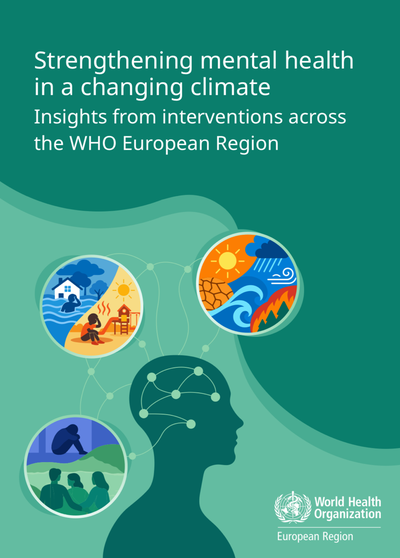
In August 2023, Slovenia experienced its worst disaster on record. Extreme rainfall triggered widespread river flooding and more than 5,000 landslides, affecting over 85% of municipalities, damaging homes and essential services, and causing major social, economic and health impacts. In response, the National Institute of Public Health (NIJZ) coordinated a multi-stakeholder mental health and psychosocial support response involving public authorities, health services, social work centres, humanitarian organisations, professional associations and schools.
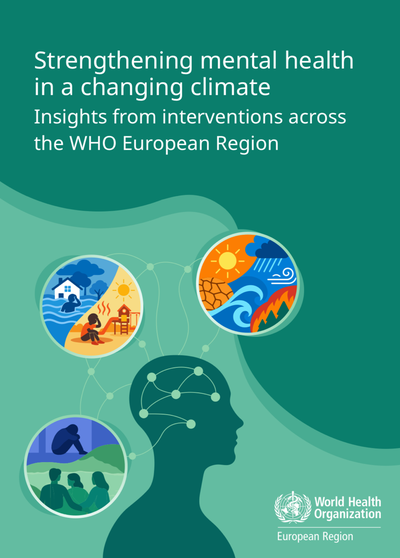
This new Observatory case study, developed and first published by the WHO European Centre for Environment, Climate Change and Health in the report "Strengthening Mental Health in a Changing Climate: Insights from Interventions across the WHO European Region", shows how a multi-stakeholder response can be coordinated to support with mental health and recovery following a disaster.
Knowledge for action on climate change and health
Ask Climate ADAPT

Your new AI assistant for exploring information and data from the Observatory and other knowledge providers on Climate-ADAPT.
News
Sign up to receive the latest updates from the Observatory.
Read the latest newsletter here.
Upcoming events
23 September - 2 December 2026 - Online
Training course: Ethics, Law and Governance for Climate and Environmental Action in Public Health
23 November 2026 - Dublin, Ireland
Climate Change and Health AMR, Zoonotic Diseases and the One Health approach
This Presidency conference will convene policymakers, researchers and civil society to explore how the One Health approach can address the interconnected challenges of climate change, human health, animal health and environmental sustainability.
25 November 2026 - Brussels and online
Conference on Health, Environment, Climate: an EU agenda to reduce the burden of disease and inequalities
This high-level conference will bring together EU, national and local policy-makers, scientists, health experts and civil society organisations to present the latest evidence on the health costs of pollution and discuss the way forward for an EU 2030 agenda which invests in people’s health, reduces disease cost, and lessens inequalities.
30 November - 3 December 2026 - Dublin, Ireland
RESOLVE: Resilience and Evaluation of Systems under Ongoing Learning, Vulnerability and Emergencies
How do health systems survive, adapt, and transform in the face of crisis? From pandemics and climate shocks to cyberattacks and economic instability, today's health systems must not only withstand stress but emerge stronger. RESOLVE is a four-day intensive course designed to equip public health professionals, policymakers, analysts, and system leaders with the knowledge and tools to evaluate and enhance health system resilience. Delivered by experts from Trinity College Dublin and the European Observatory on Health Systems and Policies, this course blends cutting-edge research, real-world case studies, and practical exercises including a dynamic health system resilience stress test to deepen your understanding and sharpen your strategic response skills.
Language preference detected
Do you want to see the page translated into ?
Exclusion of liability
This translation is generated by eTranslation, a machine translation tool provided by the European Commission.
Exclusion of liability
This translation is generated by eTranslation, a machine translation tool provided by the European Commission.