All official European Union website addresses are in the europa.eu domain.
See all EU institutions and bodies
An official website of the European Union | How do you know?
Environmental information systems
EN


Key messages

Agriculture and food are among Europe's most climate-vulnerable sectors and were identified as the most frequently reported climate-affected sector by European countries in 2025 (EEA, 2025), climate risks to food production are increasing across all European regions, with impacts cascading to water resources, rural livelihoods, biodiversity, public health and the wider economy.
Climate-resilient agriculture is becoming an economic as well as an environmental imperative. Rising temperatures, changing precipitation patterns and more frequent droughts, floods, heatwaves and compound climate hazards are increasing production risks while amplifying existing economic pressures on farms. Building resilience requires farming systems that reduce vulnerability, strengthen soil and water functions, diversify production and improve long-term economic viability.
The EU Adaptation Strategy, European Climate Law, European Green Deal, Common Agricultural Policy (CAP), LULUCF Regulation, Carbon Removals and Carbon Farming Regulation and the Nature Restoration Regulation provide an enabling policy framework to strengthen the climate resilience of Europe's agriculture and food systems. Adaptation is increasingly supported through knowledge platforms, practitioner networks, EU-funded research and innovation programmes.
Effective adaptation requires robust climate risk assessments, implementation of adaptation measures, and stronger monitoring, evaluation and learning systems. While adaptation planning has advanced significantly across Europe, further efforts are needed to assess the effectiveness of agricultural adaptation actions and accelerate implementation on the ground.
Agriculture also contributes to around 10% of the European Union's greenhouse gas emissions, primarily through methane emissions from livestock, nitrous oxide emissions from fertiliser use and carbon dioxide emissions from land management. Strengthening climate resilience therefore complements efforts to reduce emissions, protect natural resources and safeguard long-term food security.
Building climate-resilient agriculture requires an integrated approach combining sustainable farm management, resilient food systems and supportive policy frameworks. Measures such as improving soil health, increasing water retention, diversifying production systems and strengthening ecosystem functions can reduce climate risks while enhancing long-term farm viability. Tailored adaptation pathways, supported by public investment, knowledge exchange and innovation, will be essential.
Why climate change adaptation matters for the Agriculture sector
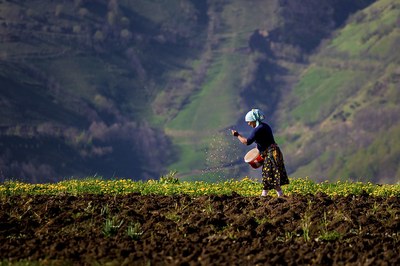
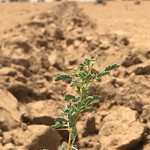
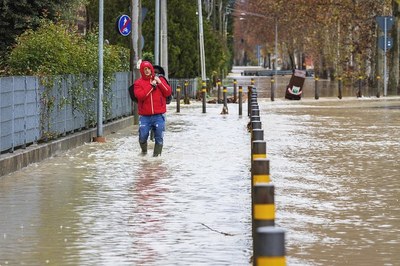
Agriculture underpins Europe's food security, rural economies and landscapes, yet it is increasingly exposed to climate change. Rising temperatures, changing rainfall patterns and more frequent and intense climate extremes—including droughts, floods, heatwaves and wildfires—are already affecting agricultural production across Europe. Climate impacts vary across regions: Southern Europe is increasingly affected by prolonged droughts and water scarcity, while Western and Northern Europe experience heavier rainfall and flooding. Central and Eastern Europe are facing more frequent heatwaves, droughts and compound climate hazards.
The first European Climate Risk Assessment identifies agriculture and food systems as among Europe's most urgent climate risks. Water scarcity and heat stress pose particularly severe risks to crop production, especially in Southern Europe. Livestock productivity, soil health, pollination and food supply chains are increasingly affected across the continent. Climate impacts can cascade across interconnected food, water, energy and transport systems, with consequences for rural livelihoods, ecosystems and the wider economy.
Across Europe, countries are strengthening adaptation planning through climate risk assessments and sectoral adaptation strategies. However, implementation remains uneven. Accelerating adaptation action, strengthening monitoring and evaluation, and supporting farmers with practical knowledge, financing and capacity building will be essential to ensure a resilient, competitive and sustainable agricultural sector in a changing climate.
Explore further









External links
Language preference detected
Do you want to see the page translated into ?
Exclusion of liability
This translation is generated by eTranslation, a machine translation tool provided by the European Commission.
Exclusion of liability
This translation is generated by eTranslation, a machine translation tool provided by the European Commission.