All official European Union website addresses are in the europa.eu domain.
See all EU institutions and bodies
An official website of the European Union | How do you know?
Environmental information systems
EN


Key messages

Firms face two main types of climate-related risks: direct physical risks (such as a flood or heatwave) and transition risks that arise from society’s response to climate change. Examples of the latter include for example loss of customers due to bad reputation and financial sector exposures to specific sectors.
Within the EU, countries in the south are likely to report higher physical risks to firms’ operations than other regions. This is followed by firms in Central and Eastern Europe, reporting a higher vulnerability to physical climate risks than firms in Western and Northern Europe. Transition risks are less evident, as they depend on global decarbonisation commitments.
- InvestEU helps to mobilize private investments for policy priorities in the EU, such as the green and digital transition or innovation. It brings together multiple older instruments, making access to finance and investments in European businesses simpler, more efficient and more flexible. The InvestEU Fund is implemented through financial partners that will invest in projects, benefitting from the protection of EU budget guarantee to increase the risk-bearing capacity of the investors.
Why climate change adaptation matters for the Business and industry sector
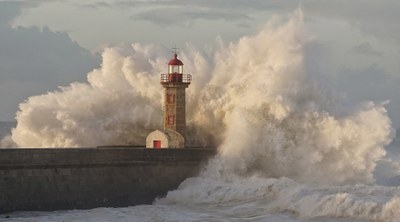
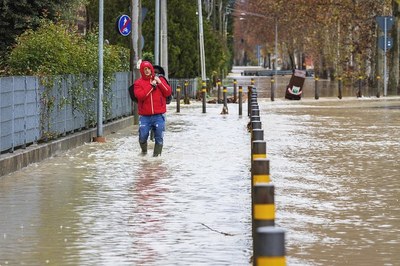
Physical risks emerge from exposure to acute climate events or chronic transformation. Climate change can have significant impacts on buildings, production, supply chains, distribution, and consumer demand in various ways. Climate change is leading to more frequent and severe extreme weather events, such as extreme heat, floods and droughts. These events can lower productivity due to heat effects on workers, both indoors and outdoors.
Extreme weather like droughts, heatwaves, wildfires, floods and major storms leads to spikes in commodity prices, delayed shipments of products and electronics and causes semiconductor shortages. In addition, the EU faces major threats from global supply chain disturbances. Those are due to factors such as the vulnerability of trade partners, the concentration of key industries in specific areas, the susceptibility of important transportation networks, and current business practices. Internal crises, geopolitical tensions and inadequate policy decisions could worsen these risks.
Non-climatic drivers, such as rising nationalism and deteriorating relations between major powers could significantly impact food crisis. If these trends persist, they may heighten the EU’s vulnerability to global food supply chain risks.
The first European Climate Risk Assessment identified and assessed several climate risks relevant for businesses: risk to supply chains, risk to transport infrastructure and health risks to workers during heatwaves.
Explore further







External links
Language preference detected
Do you want to see the page translated into ?
Exclusion of liability
This translation is generated by eTranslation, a machine translation tool provided by the European Commission.
Exclusion of liability
This translation is generated by eTranslation, a machine translation tool provided by the European Commission.