All official European Union website addresses are in the europa.eu domain.
See all EU institutions and bodies
An official website of the European Union | How do you know?
Environmental information systems
EN


Key messages

- Climate change is already affecting communities in Europe and around the world. While rapid emissions reductions and the transition to climate neutrality remain essential, adaptation is equally necessary. Even under the most ambitious mitigation scenarios, the impacts of climate change will continue to shape societies, economies, and ecosystems for decades—and in some cases centuries—to come.
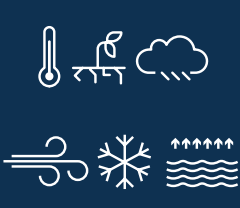
- As climate change drives more frequent and intense extreme weather events, the links between climate change adaptation and disaster risk reduction are becoming increasingly evident. Hazards such as droughts, wildfires, heatwaves, floods, and heavy rainfall require integrated approaches. Those address the full risk management cycle, from prevention and preparedness to response, recovery, and long-term resilience building. The European Climate Risk Assessment (EUCRA) further highlights how climate risks can interact and cascade across sectors and systems, reinforcing the need for coordinated and forward-looking risk management.
- The EU recognises the strong synergies between climate adaptation and disaster risk management. Both policy areas are increasingly being integrated across key sectors, including water management, flood and drought prevention, land-use planning, and the protection of critical infrastructure. Mainstreaming climate resilience across these areas is essential to reduce vulnerability and strengthen Europe’s capacity to withstand current and future climate impacts.
Why climate change adaptation matters for the Disaster risk reduction sector
Over recent decades, Europe has experienced a marked increase in the frequency and severity of weather- and climate-related hazards. Droughts, forest fires, heatwaves, and extreme precipitation events are placing growing pressure on communities, ecosystems, and economies across the continent. EUCRA identifies 36 major climate risks for Europe and shows that several have already reached critical levels, while many could become more severe without further action.
Scientific evidence indicates that these trends are expected to continue, even as efforts to reduce greenhouse gas emissions accelerate. Climate risks are further compounded by broader socio-economic and environmental changes, including demographic shifts, urbanisation, and land-use change. As a result, disaster risk reduction can no longer focus solely on responding to emergencies; it must also anticipate future risks and strengthen resilience before disasters occur.
Integrating climate change adaptation into disaster risk reduction policies and practices helps communities better prepare for a changing climate, minimise losses and damages, and recover more effectively from extreme events. By combining forward-looking adaptation measures with effective risk management, Europe can enhance its resilience and better protect people, infrastructure, natural resources, and economic activities from escalating climate risks.
Explore further








External links
Language preference detected
Do you want to see the page translated into ?
Exclusion of liability
This translation is generated by eTranslation, a machine translation tool provided by the European Commission.
Exclusion of liability
This translation is generated by eTranslation, a machine translation tool provided by the European Commission.