All official European Union website addresses are in the europa.eu domain.
See all EU institutions and bodies
An official website of the European Union | How do you know?
Environmental information systems
EN


Key messages

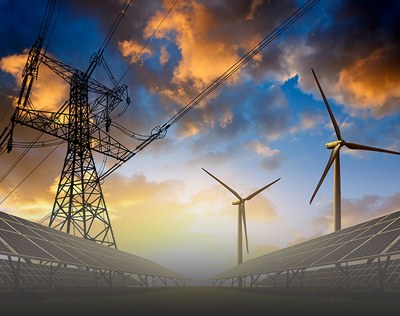
- Climate change is reshaping both energy production and supply across renewable and non-renewable sources. Rising temperatures, changing weather conditions and more frequent extreme weather events can reduce the efficiency of power generation, constrain energy production, and damage critical infrastructure. Strengthening the resilience of the energy sector is therefore essential to achieve EU climate objectives, not least because the sector remains one of the largest sources of anthropogenic greenhouse gas emissions.
- The implementation of the European Climate Law and the Fit for 55 package is expected to drive a profound transformation and decarbonisation of Europe’s energy system. While the EU Adaptation Strategy does not propose dedicated adaptation measures for the energy sector, the wider EU climate and cohesion policy framework (centered on the European Green Deal and the European Climate Law) is likely to shape future adaptation pathways. Substantial investments are to ensure that energy infrastructure—especially renewable energy—is designed and deployed in a climate-resilient manner.
- A growing body of evidence supports climate adaptation in the energy sector. The Joint Research Centre has assessed the impacts of climate change on Europe’s energy system, while the EEA has examined adaptation opportunities and the resilience of Europe’s energy infrastructure. Complementing this knowledge base, numerous EU-funded research and innovation projects are developing practical solutions to integrate climate adaptation into energy policy and planning.
Why climate change adaptation matters for the Energy sector
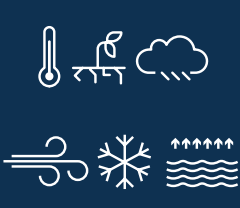
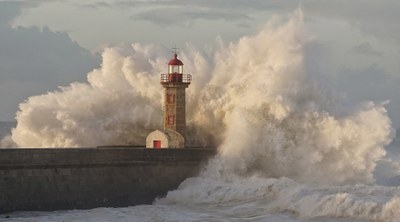
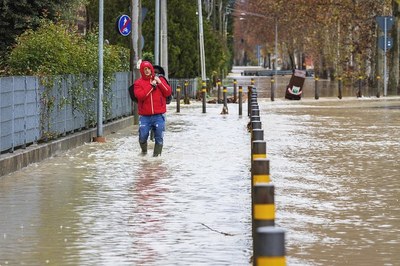
Climate change affects the energy sector in multiple ways, influencing energy demand, production, transmission and distribution. Shifts in seasonal and annual heating and cooling needs are altering consumption patterns. In parallel, increasing temperatures and changing water availability pose significant challenges to electricity generation. Reduced power plant efficiency, constraints on cooling water supplies, and lower hydropower potential are among the most prominent risks. At the same time, extreme weather events—including floods, storms, droughts and wildfires—can disrupt operations and damage critical energy infrastructure.
The first European Climate Risk Assessment identifies energy disruptions, caused by heat and drought, as among the most urgent climate risks Europe is facing, with southern European regions particularly exposed. The report highlights the systemic nature of these risks: disruptions to energy supply can trigger cascading impacts across economic sectors and essential services. This can have consequences for security, economic prosperity and public health.
The energy sector occupies a central position in the EU’s response to climate change. As one of the principal sources of greenhouse gas emissions, it is fundamental to mitigation efforts and the transition towards climate neutrality. Given this dual role—as both a sector vulnerable to climate impacts and a key enabler of climate action—integrating adaptation considerations into energy policy, planning and investment is important. This imperative is reflected in the EU Adaptation Strategy, which recognises the need to enhance the resilience of Europe’s energy system alongside accelerating its decarbonisation.
Explore further







External links
Language preference detected
Do you want to see the page translated into ?
Exclusion of liability
This translation is generated by eTranslation, a machine translation tool provided by the European Commission.
Exclusion of liability
This translation is generated by eTranslation, a machine translation tool provided by the European Commission.