All official European Union website addresses are in the europa.eu domain.
See all EU institutions and bodies
An official website of the European Union | How do you know?
Environmental information systems
EN


Key messages

Both acute climate hazards, such as extreme weather events, and chronic climate effects arising from long-term environmental change are increasingly affecting information and communications technology (ICT) infrastructure and services.
At the same time, ICT is emerging as a critical enabler of climate action, supporting innovative solutions for climate change mitigation, adaptation, monitoring, forecasting and risk management.
The 2021 EU Adaptation Strategy recognises digital transformation as a key driver for achieving the adaptation objectives of the European Green Deal. Advanced digital initiatives, including Destination Earth and digital twins, offer significant opportunities to enhance understanding of current and future climate risks at both global and local scales. Complementary investments in Earth observation and ocean monitoring will further strengthen Europe’s climate knowledge base and decision-making capacity.
Why climate change adaptation matters for the ICT sector
Climate change presents a growing range of challenges for the ICT sector, which can broadly be categorised into acute climate hazards and chronic climate stresses.
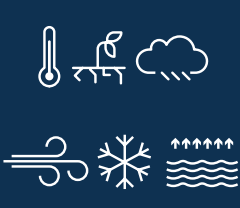
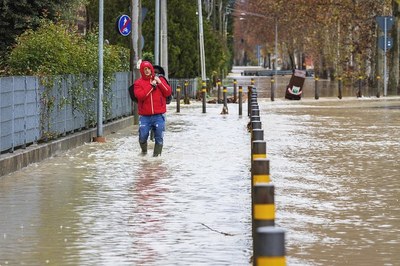
Acute hazards include extreme weather events such as riverine, coastal and pluvial flooding, storms, heatwaves and ice storms and freezing rain events. These events can disrupt or damage critical ICT infrastructure, compromising the physical assets upon which digital communications and services depend. While often short-lived, such events can have severe and far-reaching consequences for connectivity, business continuity and the delivery of essential services.
Chronic climate stresses arise from gradual but persistent shifts in climatic conditions. These include rising average temperatures, increased exposure to temperature extremes, prolonged heat periods, greater temperature variability, higher humidity levels, and changes in precipitation and wind patterns. Although these impacts are generally less catastrophic than acute events, they can accelerate the degradation of ICT assets, increase the frequency of equipment failures, and shorten infrastructure lifespans. As a result, operators may face higher maintenance costs, more frequent replacement cycles and a growing need for monitoring and preventive interventions.
Climate change also poses indirect challenges to the ICT sector through its effects on energy systems. Rising temperatures are expected to increase demand for cooling, placing additional pressure on electricity networks. Data centres, which underpin an increasingly digital economy, are particularly exposed given their substantial energy and water requirements for cooling operations.
Despite these challenges, the ICT sector generally exhibits a relatively high degree of climate resilience due to its decentralised and modular nature. Redundant communication networks, diversity among internet service providers, emergency roaming capabilities and backup power solutions all contribute to system robustness and continuity. However, this resilience may evolve as digitalisation advances. The growing reliance on cloud computing and hyperscale data centres is leading to greater concentrations of infrastructure, potentially increasing exposure to climate-related risks and highlighting the importance of integrating climate resilience into future digital investments and planning.
Explore further









External links
Language preference detected
Do you want to see the page translated into ?
Exclusion of liability
This translation is generated by eTranslation, a machine translation tool provided by the European Commission.
Exclusion of liability
This translation is generated by eTranslation, a machine translation tool provided by the European Commission.