All official European Union website addresses are in the europa.eu domain.
See all EU institutions and bodies
An official website of the European Union | How do you know?
Environmental information systems
EN


Key messages

- Buildings can be vulnerable to climate change – which may impact both structural features of the building, e.g. increased risk of collapse and degradation of construction materials, and indoor conditions of the building. An inability to properly regulate indoor temperatures may lead to thermal discomfort for users, potentially resulting in negative impacts on health, well-being, and work productivity.
- The EU is working to address this problem on several fronts. It has worked to promote the integration of climate change adaptation in building standards, has established directives to increase energy efficiency and performance. It also developed policies to encourage renovation of buildings that leads to improved resource and energy efficiency. The European Commission produced EU-level guidance on the climate resilience of buildings in 2023.
- The knowledge on how to increase the resilience of the built environment is updated and elaborated through various research programmes. The EU also offers financial support, for instance through the New European Bauhaus, for innovative ideas and solutions.
Why climate change adaptation matters for the Building sector
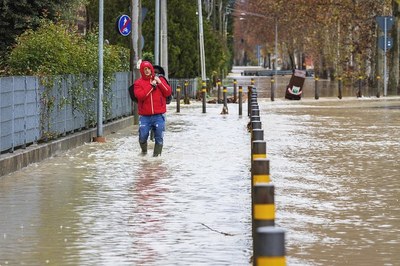
Climate change can cause damage to both residential and non-residential buildings (see the first European Climate Risk Assessment - EUCRA). It can cause an increased risk of collapse, degradation of construction materials and even of the structural integrity of the buildings. It can also cause significant loss of value because of more storms, snow or subsidence damage, water encroachment, deteriorating indoor climate and reduced building lifetime.
Besides impacting the structural features of a building, climate change can influence the conditions under which people live, work and interact indoors (major risk in EUCRA). Buildings’ users and residents need to use heating and cooling systems to cope with thermal discomfort brought about by temperature extremes. Vulnerable groups of society often reside in lower quality housing which makes them more susceptible to climate change impacts. People living in urban areas are particularly at risk: the urban heat island effect causes various human health issues. Health and social care facilities are also at risk of climate change effects, such as heat, flooding and storms, ultimately impacting human health.
Explore further






External links
Language preference detected
Do you want to see the page translated into ?
Exclusion of liability
This translation is generated by eTranslation, a machine translation tool provided by the European Commission.
Exclusion of liability
This translation is generated by eTranslation, a machine translation tool provided by the European Commission.