All official European Union website addresses are in the europa.eu domain.
See all EU institutions and bodies
An official website of the European Union | How do you know?
Environmental information systems
EN


Greening cities reduces the negative impacts of climate change such as heatwaves, flooding and drought in cities, reducing disaster risk, fostering wellbeing and enhancing the beauty of any city, while decreasing pollution.
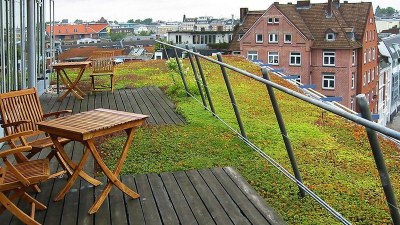
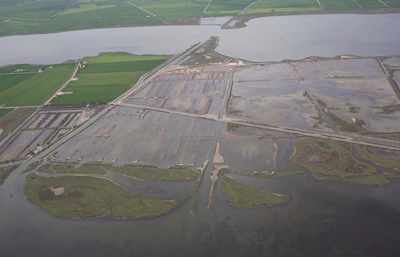
Urban green and blue infrastructure include different types of blue and green spaces such as forests, wetlands, agricultural land, grassland, public parks, private gardens, single green elements (street trees, green roofs, etc.) or ponds and streams. The spatial scale of these Nature-based Solutions (NbS) can vary from large, forested areas to small rainwater drainage systems, e.g. bioretention cells or swales.
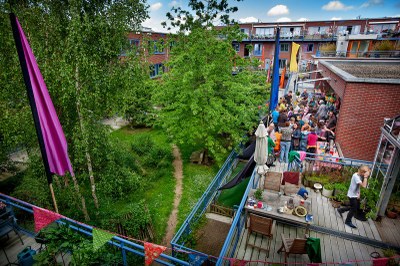
Urban green and blue infrastructure help build resilience, benefiting society and environment at the same time. They improve living and working conditions, also providing leisure for tourists. Participatory approaches engaging stakeholders in design, implementation and management should be sought to avoid land use conflicts and foster stakeholders ’awareness to climate change impacts and possible solutions.
Relevant EU policies
Biodiversity Strategy for 2030, Green Infrastructure Strategy, Water framework Directive
Advantages
- Creates multiple benefits and facilitates multiple options for use (multifunctional opportunities)
- Enables biodiversity increase in urban areas with associated ecosystem services
- Improves well-being of inhabitants, workers and tourists
- Creates new opportunities for jobs and investment to establish and maintain green and blue infrastructure
- Can entail lower management costs compared to of grey infrastructure
- May improve local tourism economy, since green spaces can be part of tourist itineraries offered by cities
- Can rely on an increasing enabling policy landscape at EU and national level
Disadvantages
- May cause conflicts with existing urban uses, if land use change is needed
- May create competing interests when private ownership is involved
- May be hindered by lack of understanding of benefits from green and blue infrastructure
- Needs more systematic evidence of effectiveness and cost-benefit assessments which can increase costs
- May create health issues (e.g. mosquitoes, pollens)
- May contribute to gentrification and social inequalities
Relevant synergies with mitigation
Carbon capture and storage
Read the full text of the adaptation option
Description
Urban Green and Blue Infrastructure planning (UGI) is a strategic approach to develop interconnected and multifunctional networks of blue and green spaces that potentially provide a wide range of environmental, social and economic benefits and simultaneously enhance the climate resilience of cities. The European Commission (EC-Green Infrastructure) emphasizes strategic green space planning at different spatial scales (from neighbourhood to city-wide) and encourages cities to promote delivering ecosystem services and protecting biodiversity. These play a crucial role in enhancing climate change adaptation and mitigation capacities. They also reduce negative impacts of climate change hazards such as heatwaves, flooding and drought in cities. Nature-based solutions (NbS) is a closely related concept, often used interchangeably with green and blue infrastructure, or serving as a broader framework for promoting and implementing such infrastructure. The EU biodiversity Strategy for 2030 states concrete actions for the promotion of nature-based solutions that should be systematically integrated into urban planning. The European Commission defines NbS as “solutions that are inspired and supported by nature, which are cost-effective, simultaneously provide environmental, social and economic benefits and help build resilience”. IUCN calls for adopting a holistic ecosystem-based approach when implementing NbS and states: “solutions based on nature use the power of functioning ecosystems as infrastructure to provide natural services to benefit society and the environment”. EEA (2021) refers to NbS as an ‘umbrella concept’ for various policy actions and approaches (e.g. ecosystem-based management) which aim to increase climate resilience and simultaneously provide co-benefits for society.
In urban contexts, NbS refer to different typologies of green and blue infrastructure. These solutions combine environmental, societal and climate challenges more efficiently than ‘conventional’ grey infrastructures. The spatial scale of NbS in cities can vary from large forested areas to small-scale storm-water systems. In addition, the role of humans in NbS can also vary greatly. For example, self-regulated natural ecosystems (such urban wetlands that provide flood control areas) require no or limited human interventions. On the other end, there can be hybrid grey-green solutions (such as systems for the management of stormwater and urban run-off, e.g. biofilters), for which technology and human intervention play a significant role.
NbS are increasingly used across European cities, with 91% of local climate action plans including such measures. In 2018, average urban tree cover across the EEA member and cooperating countries (EEA‑39) was 28.5% of the city core, and 34.7% of the larger functional urban areas, plus an additional share of blue infrastructure which further contributes to cooling cities (EEA Report 14/2023).
NbS improve living conditions for all, providing opportunities both for residents and for visitors in cities with economies reliant on tourism. Especially whenever UGI is located near important heritage sites it might be included in the city tourism offer, be part of visitors’ itineraries or integrated into city branding, ultimately adding value to urban tourism (Terkenly et al., 2020).
Stakeholder participation
Participatory approaches are needed in urban green infrastructure planning and in the design, implementation and assessment processes of NbS. Engaging with different stakeholders enhances knowledge transfer between actors, while addressing potential social or institutional barriers is crucial to enhancing societal acceptance of these solutions and finding the best option that takes local socio-political context into account. Especially local and regional authorities have a great role and therefore strong horizontal and vertical cooperation is required, but also the link to the private sector is important.
Success and limiting factors
Success factors
Explicit multifunctionality is the key success factor that makes NbS attractive in cities and leads to great opportunities to inspire and involve multiple sectors.
Demand for NbS is rising strongly due to an increasingly enabling policy landscape, both at the EU and at the national and subnational level.. Therefore, evidence-based standards and guidelines were developed for cities to ensure effective and participative UGI planning and governance of different NbS (see also Legal aspects). The. Naturvation project produced European Assessment Maps to demonstrate the potential of NbS to address societal challenges, such as climate change, public health issues and loss of biodiversity, across more than 700 European cities. In addition, integrative and inclusive governance approaches such as “mosaic” governance (combining the micro-level of active citizenship with the macro-level of strategic urban planning, Buijs et al., 2019) are good ways to promote socially cohesive and collaborative UGI planning, implementation and maintenance.
Limiting factors
Managing the urban landscape is a complex process subject to conflicting agendas such as housing, transport, commercial infrastructure, and economy. Urban green infrastructure needs comprehensive planning and maintenance. Establishing a city-wide green space network with connected corridors needs to be weighed and valued as one key land use type together with other key land use sectors. Competing and conflicting land use interests, weak collaboration with key stakeholders (e.g. landowners, building sector, investors) or silo-thinking in city administration can act as strong limiting factors. Lack of knowledge on benefits, or experience in how to implement or design NbS can cause negative attitudes among practitioners, policymakers or citizens.
A comprehensive overview of limitations is reported in the EEA report on urban adaptation (EEA Report 14/2023). They include the lack of systematic evidence of effectiveness that can only emerge with long-term monitoring, issues with cost-benefit analyses, limited technical capacity, context-specific situations that prevent one size-fits-all solutions, possible health concerns due to e.g. mosquitoes or pollens. Moreover, competition for space is a key limiting factor for the development of green and blue space, especially in dense urban areas.
Finally, other limiting factors depend on possible social injustices. Creating new green and blue spaces can contribute to gentrification and property price increases that can result in the displacement of community members. If the design of green and blue spaces is not informed by social considerations, inequitable possibilities to access these areas may create social injustices. In fact, the deprivation and lack of access to this space may expose some residents to a reduced quality of life from a health, social and psychological perspective (EEA Report 04/2025).
Costs and benefits
Cost saving
The loss of green spaces, degradation of natural ecosystem, densification of city structure and increasing proportion of paved soil have negative impacts on the water cycle, air quality, local temperature and decrease the climate resilience of cities. These have great economic costs for the society. Greening of cities (e.g. planting trees or establishing new green space), restoration of degraded ecosystems, choosing low-intensive management practices in parks, or constructing local nature-based solutions to control run-off water or flooding can bring significant direct savings compared to traditional engineered-based solutions. In addition, these green actions also have many indirect economic benefits e.g. by attracting investors and creating new jobs for a variety of sectors. There is also an increasing economic case being made for integrating grey with green measures. Grey solutions usually entail high upfront capital investments and longer-term annual maintenance costs over the project's life compared to solutions with green components (Policy Brief from the Policy Learning Platform for a greener Europe, 2024). Scientific research suggests that NbS infrastructure is, on average, estimated to be 42% cheaper and create 36% more value than infrastructure solutions that are fully grey. This happens when the broad co-benefits from NbS are taken into account (Bechauf et al., 2022). However, specific cost-benefit analysis should be always performed and support the choice of the best solution case by case, considering the local context.
Maintenance costs
The cost of UGI planning and implementation of NbS can vary greatly. They depend on many internal factors such as spatial scale, the use of technology in solutions, frequency of maintenance and need for repair. Usually, maintenance costs are lowest in natural ecosystems such as remnant habitats (e.g. urban forests or wetlands) or semi-natural ecosystems (e.g. replacing lawns with meadows). Establishment and maintenance costs of some types of NbS are partly or entirely covered by citizens (e.g. urban farming), NGOs (e.g. restoration actions of degraded habitats) or private businesses (stormwater ponds for managing run-off water). The European Union has put great effort into mobilising NbS in Europe. EU facilitates strengthening knowledge transfer about successful cases (e.g. Urban Nature Atlas) and offerers public digital platforms to encourage collaboration with private and public sectors (The Smart Cities Marketplace) and offers financial support through the European Green Deal. Funding for incorporating green and blue infrastructure into the urban planning can be retrieved from the New European Bauhaus, a policy and funding initiative that “makes green transition in built environments and beyond enjoyable, attractive and convenient for all”. Different tools are available, including Guildelines for investors, to verify how and why investments in built environment projects can be aligned with the New European Bauhaus.
Benefits
Green spaces and NbS in cities can contribute to reduce disaster risk, improve water management and produce local cooling effects to better cope with high temperatures and heatwaves. In addition to solving specific environmental challenges, green and blue infrastructure offer co-benefits that extend beyond their primary purpose. For example, parks and water bodies can enhance the beauty of the city, while also serving as leisure spaces, fostering mental and physical wellbeing (Nilsson and Johansson, 2021)
Other co-benefits include: supporting urban biodiversity, carbon storage (mitigation), mitigation of air pollution, offering spaces for recreation, nature experience and providing increased social, physical and mental wellbeing. NbS in urban areas can contribute to several Sustainable Development Goals (SDGs), and especially to the targets on sustainable cities (11).
Economic benefits may finally relate to an increase in the tourism economy. The availability of green spaces may play a significant role characterising what cities may offer (Terkenli, et a. 2020). This can lead to shifting tourists’ choice towards them especially in heat stress prone destinations (e.g., in the hot Mediterranean summer).
Legal aspects
In many EU Member States urban green infrastructure and nature-based solutions have already been supported by national legislation related to land-use planning, stormwater management, surface water or biodiversity protection. Incentives and payments encourage the implementation of NbS and UGI instead of traditional grey infrastructure.
Many cities have strategies in place to improve and expand the green infrastructure in the urban environment. , For example, the Hamburg Strategy foresees to expand green roofs. The Superblock program in Barcelona aims to reshape the urban environment including justice aspects. In addition, specific planning tools such as the Biotope Area Factor can be used in local zoning to require a proportion of the area to be left as green space (see the Berlin case study) . Similarly, national level guidelines facilitate the integration of green and blue infrastructure into the city design. For example, in Sweden the National Board of Housing, Building and Planning issued a guidebook on the integration of ecosystem services in planning, building and maintenance of the built environment, which also includes information on nature's value for climate change adaptation. The Swedish Environmental Protection Agency published National Guidelines for NBS, a tool for climate change adaptation and other societal challenges.
The European Union strongly supports the concept of green infrastructure and nature-based solutions in enhancing climate resilience, sustainable water management and well-being of humans and biodiversity in European cities. For example, UGI and NbS are seen as key concepts in the EU Biodiversity Strategy 2030 (2020) together with the EU Nature Restoration Law, the EU Strategy on Green Infrastructure (2013) and the EU Water Framework Directive. Finally, the 2021 EU Strategy on Adaptation to Climate Change stresses the importance of fostering nature-based solutions for adaptation, also through their upscaling at the urban level.
Implementation time
Implementation time varies depending on spatial scale, from a few months to several years. For example, the implementation of small-scale NbS such as green walls or local biofilters is a rather fast process and actual construction time takes less than a year. However, planning and designing, getting official permissions, integration to other planning and development processes may lengthen the implementation time. Large scale green space planning and implementation (e.g. the development of a multifunctional park) may take several years. Technical implementation of novel green spaces is also shorter than the full ecological implementation. It may take several years before vegetation planted into green spaces or single NbS such as green roofs deliver their full ecosystem functions (e.g. climate mitigation or water and nutrient holding capacity).
Lifetime
The expected life-time of interconnected urban green infrastructure should be very long, much longer than single buildings or grey infrastructure. The age of a single green space can vary from several hundreds of years (e.g. historical parks) to a few years (e.g. green roofs). The life-time of single NbS can also vary, but the aim is their long-term maintenance.
References
EEA Report 14/2023. Urban adaptation in Europe: what works?
EEA report 04/2025. Social fairness in preparing for climate change: how just resilience can benefit communities across Europe.
EEA, (2021). Nature-based solutions in Europe: Policy, knowledge and practice for climate change adaptation and disaster risk reduction. EEA Report 1/2021.
ETC-CA Technical Paper 3/23 Economic enabling conditions for scaling of Nature Based Solutions
EEA (2023). Scaling nature-based solutions for climate resilience and nature restoration, briefing
Assessing the benefits of nature-based solutions in the Barcelona metropolitan area based on citizen perceptions, Nature-Based Solutions, Volume 2, 2022
Joint Research Centre (JRC), 2019. Strategic Green Infrastructure and Ecosystem Restoration.
Websites:
Published in Climate-ADAPT: Apr 15, 2021
Adaptation Option illustrations (5)

Related Resources
Language preference detected
Do you want to see the page translated into ?
Exclusion of liability
This translation is generated by eTranslation, a machine translation tool provided by the European Commission.
Exclusion of liability
This translation is generated by eTranslation, a machine translation tool provided by the European Commission.