All official European Union website addresses are in the europa.eu domain.
See all EU institutions and bodies
An official website of the European Union | How do you know?
Environmental information systems
EN


Key messages
- Climate change adaptation in the Mediterranean (Euro-Med) region is supported in several policies, strategies and funding programmes at the transnational level of governance. It is mainly addressed by Priority 2 of the EU Interreg Euro-Med Programme (2021-2027). This priority determines the EU co-funding of shared solutions for cross-border climate change challenges that require cooperation among organisations from different countries.
- The whole Mediterranean Sea Basin is covered by the Barcelona Convention and by the UNEP Mediterranean Action Plan (UNEP-MAP). Examples where climate change adaptation is considered are: the Mediterranean Strategy for Sustainable Development (MSSD 2016-2025), the Mediterranean Experts on Climate and Environmental Change (MedECC), and the Protocol on Integrated Coastal Zone Management (ICZM Protocol, 2008).
Geographic scope
The cooperation area of the Mediterranean region includes countries from the Northern shore of the Mediterranean. The Cooperation Area of the Interreg EURO-MED programme (2021-2027) embraces the whole area of the previous programme (southern parts of Portugal, Spain and France, almost the entire territory of Italy, and the whole extension of Slovenia, Croatia, Greece, Malta, Cyprus, Albania, Bosnia-Herzegovina and Montenegro). With additional two countries (Bulgaria and Republic of North Macedonia), for the first time after two previous programming periods, it reaches as well the Black Sea coastal area. Additional regions from Spain (Extremadura, Castilla-La Mancha and Comunidad de Madrid) are also included. Due to Brexit, Gibraltar (UK)*, that participated in the two previous programming periods, is no longer part of the transnational Programme area. A map comparing the old and new borders can be seen here.
* From the entry into force of the UK Withdrawal Agreement on 1 February 2020, content from the United Kingdom will no longer be updated on this website.
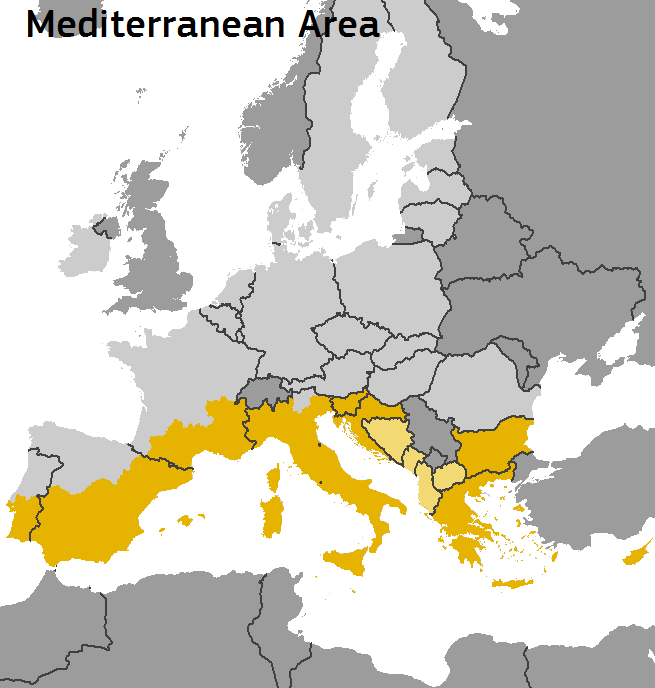
Why climate change adaptation matters in the Mediterranean (Euro-Med) region
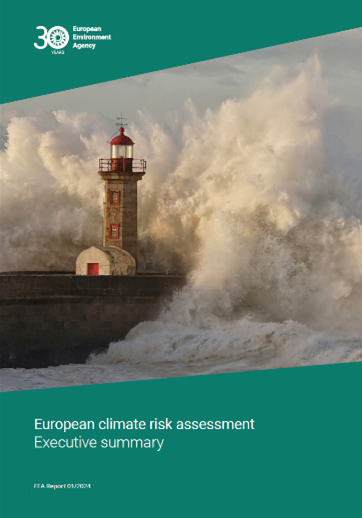
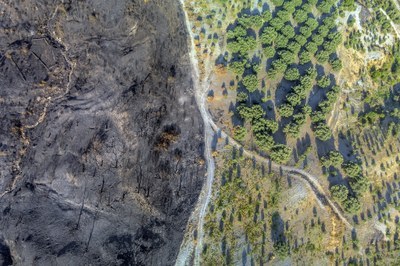
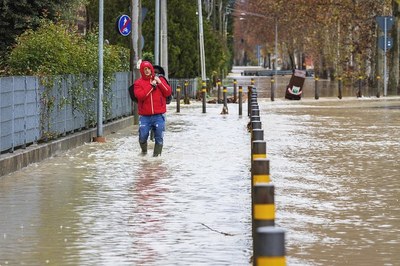
The 2024 European Climate Risk Assessment has shown that the Mediterranean (Euro-Med) region as part of Southern Europe is a hotspot for multiple climate risks: It is strongly affected by climate change through heat waves, droughts, wildfires, and flooding. Policies and measures coordinated across borders need to be taken to effectively make this transnational region climate resilient.
Policy framework
1. Transnational cooperation programme
2. Macro-region strategies
3. International conventions and other cooperation initiatives
4. Adaptation strategies and plans
Explore further











Language preference detected
Do you want to see the page translated into ?
Exclusion of liability
This translation is generated by eTranslation, a machine translation tool provided by the European Commission.
Exclusion of liability
This translation is generated by eTranslation, a machine translation tool provided by the European Commission.